


Van Soghomonyan's creations have intrigued and amazed me for more than 20 years. In 1987, The Soviet Painters Union organized a large solo exhibition of his ceramics. This was a striking array of modern sculpture with bold paintings and exquisite graphics. The works appeared to be unconventional symbols of our days, where the artist persistently suggested not merely the pursuit of artistic forms, but more importantly, aesthetic ideas.
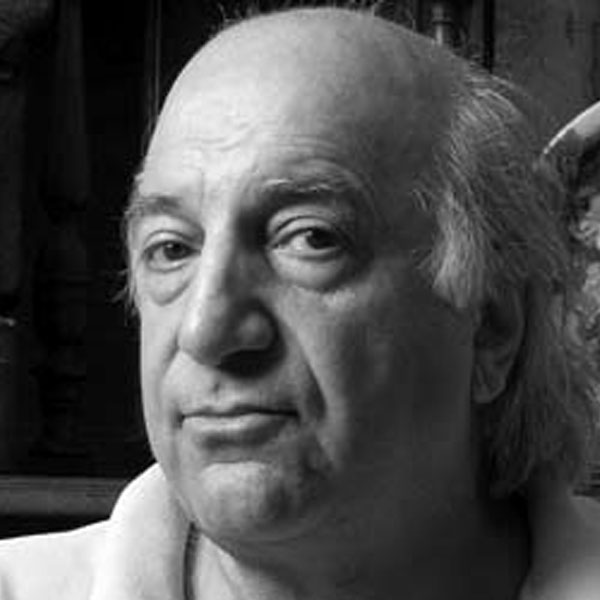
Ruben Angaladyan
Honored Art Worker of the RA
The emergence of artist's freethinking coincided with the collapse of the Soviet Union. Cultural accents were changing not only in Armenia, but on a global scale. However, then in distant 1987, at his personal exhibition, the artist foresaw definite tendencies of cultural development. This is the essential bench mark for perception of his art. Even after two decades, Van still advocates the ways of development in European cultures, a topic in which he has earned the right to express his expert opinion.
Van's main priority and dedication has always been to the comprehensive generalization of western aesthetic experience. Some of the foreign exhibitions and symposia that Van participated in through the 1970-80's are as follows: Kyoto (Japan), Kecskemet (Hungary), Berlin, Halle, Remscheid, Cologne (Germany), Paris, Vailhourles (France), Montreal (Canada), Moscow, St Petersburg (Russia), Philadelphia, Pittsburgh, Atlanta, New York (USA), Geneva (Switzerland).
Ruben Angaladyan
Honored Art Worker of the RA
To discover what motive the artist, we have to understand what seemed most important to him in art and in humanity in general. Inner freedom and culture is very important to Van and the idea of innovation is more vital to him than visual content is. This is his main principle. Referring to M. Heidegger' "Art and Space", we read: "The sculptured body embodies something. Does it embody space? Is sculpture an occupying of space, a domination of space? ". In the 1970 through the 80's, sculptural images of Soghomonyan's ceramics were classified into two groups: lyrical and philosophical. The first one is displayed in works such as "Windows", "Nocturne", "Insight", the second one - in "People-mannequins", "My planet", "Phoenix", "Human-box" (most likely, as an association of famous novel by eminent Japanese writer Kobo Abe - something exceedingly interesting and unexpected of itself), "Silence", "Reminiscences", "Human and biosphere" (Award of International Ceramics Contest). In the first case we observe the artist's emotional outburst, giving birth to symbols, and the second one demonstrates the artist's intellectual pursuit, which are more mysterious and emblematic. If these two are combined, we will discover the approximate symbiosis of Van's complicated, multilayered art. Why "approximate"? For the register of his sensual self-expression and ideas are far too complex. Van belongs to the type of artists concerned about the diverse strata of human existence - history, politics, pedagogy, cult urology, ethnography, philosophy... The aspiration to broaden analysis of human life for Van Soghomonyan is not only interesting, but also didactic. He observes and tries to understand the synthesis of present and future in the substance of contemporary art. In the eclectic stream of today's diverse art-objects Van is firm in his belief that abstemiousness in experimentation is more determined to exit to the art of future than feckless attempts to startle, a tendency we witness even in the most serious galleries and museums. For him, as for me, this seems a temporary phenomenon. Having a significant and major experience, he endeavors desperately to seize the reality like an unfinished work of art liable to be accomplished.
Ruben Angaladyan
Honored Art Worker of the RA
The meaning of his art is the ability to perceive the essence of creative work, where one can see a deliberate and conscientious analysis of deep processes in society and humanity. The understanding of art's substantial missions, as well as the creation of interior shape-generating vectors, ideas about the existence and artistic memory makes this master's way controversial and authentic. In the restless and epochal 90's, Van leaves ceramics and devotes himself entirely to painting. Simultaneously, he elaborates art-objects with unique transformation of sculptural characters onto new surfaces, where the wall becomes one of the coordinates. The world of the artist's paintings spreads to the reticence of readable signs, carrying us away to its inside order. Let's refer to the paintings, such as "Self-portrait", "Three Graces", "A café in Wiesbaden", "Venice", "Tournament", "and Space and time", "Sounds" or "Expectation". Strong aesthetic associations of these works make it possible for the viewer to recall the whole painting and hypothetically draw it from memory. The reality penetrates through Soghomonyan's paintings like fragments of big generalizations, although with a strong accent on sensual associations. For instance, "Two", "The dialogue", "Moon city", "Casanova", "The abduction of Europe", "The artist and the model" is a sensual factor in late paintings of the master is the quintessence of his emotional outbursts. The energetic of colors is similar to German expressionism, with much less prickliness in style. The light is soft and mild, hiding and splashing, sometimes being stuck on the canvas as a symbol of eternal hope, touching, and giving the appearance of revelation. In this way the artist tells us about his main point. In "Self - portrait" in ceramics, 1980 we wonder whether a slightly protruding face belongs to an unknown yet certain man , the artist ,or is it a collective image of a MAN? Which would be the idea of the artist's understanding of the self-portrait's metaphor? "Self - portrait" was made as a painting, on the canvas cut off the stretcher. This compositional solution indicates the philosophic character of both the work and the creator.
Ruben Angaladyan
Honored Art Worker of the RA
It is crucial to apprehend the artist through the context of contemporary artistic tendencies, where the works of the Armenian painter are granted a metaphysical component. Aside from that, the latest Soghomonyan paintings are full of expressive principles, secret meanings and semantic accents, often similar to lyrics. He interprets famous stories, longing for the comprehension of his own "alter Ego". He creates his enigma, his world, even when examining foreign life: "Carnival in Cologne", "The city at night", "The rain in Paris", "The night in Amsterdam", "On the coast"; what is a purpose of these stories, told by Armenian artist? Is it nostalgia for home, for cozy life, for something very intimate, dear and lost? Being overwhelmed by the feeling of humaneness, strength and sincerity, one can't help thinking that this is a spiritual chronicle of artists new phase.
Ruben Angaladyan
Honored Art Worker of the RA
Van Soghomonyan's artistry doesn't bear a superficial glitter, but takes the viewer to the world of peace, where the latter is engulfed by silent waves of associations. His pursuit is not a reorganization of what has already been discovered and done; he is an innovator. This is one of most fundamental points one gets even from one the conversation with Van. The dynamic association of the master arises from the pursuit of strong contrasts. What is important to him? Literature images of antiquity or modernity? Both Van accepts everything of high quality. He would appreciate contemporary literature, with surrealistic, allegoric and symbolic characters and ideas. He'd "play" with those composing signs of conclusions. Naturalness and simplicity, gentle sense of humor and interesting conversation remains in my memory after the first meeting.
Ruben Angaladyan
Honored Art Worker of the RA
In his studio the artist seems precise and solid. His speech is quiet and distinct as his works are. His energy fills not just the symbols in his works, but also the whole spacious studio. The natural and interesting conversation made me feel at ease. The understanding was strong and thorough. Apart from minor disagreements over aesthetics of tendencies and their synthesis, we were on the same page about the backbones of cultural courses. He was demonstrating the works in the most natural manner. Unlike many others, without aggression, or admiration, anticipation of rapture or sharp criticism, Van was restrained and tactful; although I am convinced he keeps a vigilant watch on the reaction of his viewer.
Ruben Angaladyan
Honored Art Worker of the RA
His role in the establishment and formation of Armenian's art authority is obvious. A sharp perception of interconnection between sculpture and painting allows Van Soghomonyan to create objects, interesting and topical for urban environment ("Studio", "City"). His metaphors are compact and dynamic, expressing the essence of notions laconically. The urban environment doesn't confine itself to streets, gardens and squares. It is also the interior condition of dwellings. This is represented Van's art by such works as his triptych "Altar". Here we observe the more tranquil tone of reflection than in the first case, where the depiction of outward life appears to be a dominant aspect of his work. The second case demonstrates more considerate attitude; the volets could be closed, and the whole work get retired into itself. This attitude towards different viewers, their characters, education or sensitiveness is conditioned by the simple principle of Van Soghomonyan, for he is open to pedestrians and selective in his studio.
Ruben Angaladyan
Honored Art Worker of the RA
Van is inexhaustibly full of creative concepts. The artist's arsenal has many tools to be used to express our uneasy and interesting lives and to awaken our eyes with new works.
Ruben Angaladyan
Honored Art Worker of the RA
For more than quarter of a century, from the late 1960's to the beginning of the 90's, Van Soghomonyan was one of the most recognized artists in Armenian ceramics. Although he felt constrained by the limitations set upon his field of artistry, Van elevated the status of Armenian ceramics beyond the scope of the former USSR.
From an early standpoint, it was clear that Van's work was not to be defined as typical ceramics or even sculpture. His experience in specialized fields like sculpting, also defined as a "multidimensional painting", shows his versatility. Since 1992, in Germany the Wheel of Fortune made a determining turn, and Van's gift in painting, being evidently hidden for years, stroke through outside. Clay and icing moved back giving a way for oil painting, which became a new creative priority.
This new outburst of creative self-expression materialized not only on canvas, as expected, but also in diverse forms of art. This was another variation of author's "multidimensional painting". The artist implicitly felt the freedom of self-expression, incorporating subjection oil and canvas, like he did with chamotte and clay before. He was no longer simply an artist, but a "kunstler", an extensive notion in German, which doesn't recognize any guild or other professional limitations. In other words, he would do what his soul dictated in a definite moment. And although his soul would want and demand a great deal, it was always consonant and actual in light of reality, even if it had a sacral motive. According to Van, he always works without any artistic system or farfetched extended program. " A special mood, moment, an event or a fact, a performance or a book I read, music and other "stimuli" , that's what really matters for me, what is important. Therefore I don't recognize any dogma in art, not speaking of sequential development of emotions and thoughts. That's not for me".
Understandably, Van's works are extremely emotional and vigorous. Working without preliminary sketches or "a la prima", the artist tries to capture feelings, fleeting thoughts and visions. His large-scale paintings are reminiscent of wall blocks, or fresco fragments. They are monumental. They don't have minor illustrative details. You instantly perceive these works, yet simultaneously long for continuous scrutiny, because when looking intently at Van's paintings, one tries to penetrate deeply in order to pursue and uncover other meanings.
Van does not follow European fashion and new trends, yet also strives not to emphasize "the Armenian" sense of style. His canvas and sculpture are free of hackneyed national symbols. Yet the encrypted pattern of thought or mood he was in always gave his art the unmistakably shade of Armenian's. What remains obvious is only a strong combination of physical power and sensitivity. Van's paintings demonstrate his high concern about the destiny of art and spiritual culture in general. His works "Downfall of Babel", "Venice", "Altar", and "Vision" are pictorial dramas, manifested in the name of universal values.
One of his best sculptures illustrates an anthropomorphosis creature, a symbiosis of a man and a machine, with a gear instead of a heart and nails, hammered into the head. This work makes one think of a new race, not innocuous for earthmen. The opus makes one feel uneasy, not groundless.
Van Soghomonyan's art is comparable to that of a painter with deep rooted seeds in philosophy. He symbolizes universal issues, without being ambiguous or trying to solve any world issue. Artists never do. Without a didactic tone or sense of self superiority, Van solely emphasizes these problems cleverly and courageously. His artistic language is laconic and passionate, always distinct and comprehensible. This is a language of an artist and a citizen.
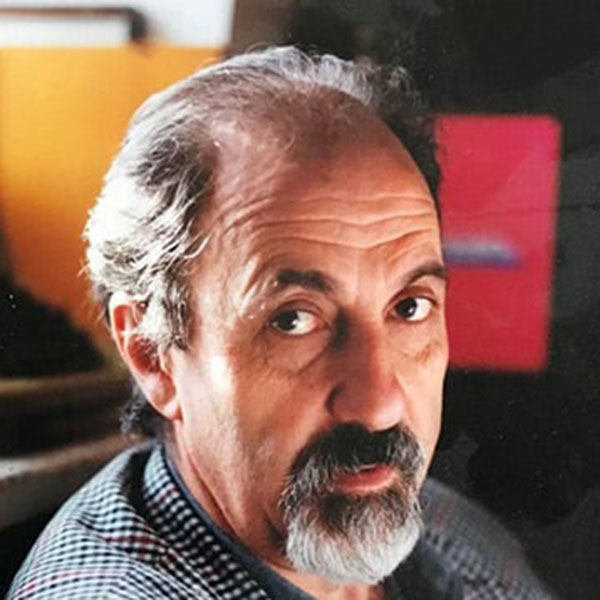
Karen Mikaelyan
Art critic
For Van Soghomonyan painting and ceramics were never detached fields, existing in independent dimensions. For him plastic arts were always connected with painting. In last few years or so, Van Soghomonyan transferred the main interest in sphere of oil painting, adhering to his sign system. Moreover he enriched it with supplementary graphic means of painting, techniques that allowed the mastering of languages of forms and objects, revealing sculptural qualities and textures of phenomena.
In his painting Van Soghomonyan achieves a speed of affection, a phenomenon sometimes lacking in the world of sculpture, but also gives all the opportunities for the artist to mirror today's life, fraught with drama. The artist restrains the eluding meaning of life, which resembles, to him, an initial world of chaos. New aesthetics emerge in the world of oil painting, saturated with tones and inflections of changed emotional situations. They reflect his unsettled soul, demanding distinct and deep expression of thoughts and feelings. The burden of Van's compositions is a destructive warfare between equal strengths where there is no winner. In Van Soghomonyan's simple and plain canvas stories, they are told with excitement and emotion.
There is always space for infinity, sunrise and sunset, abysses and outbursts, swirling and shaggy shadows...
These are indexes that testify the purification process of constant struggle, aspiring to be relieved from the unnecessary details, on the path to simplicity, harmony and peace. The artist worships spontaneity of life, expressing it vividly in his works.
Guilt, pain of suffering, powers of human passions, short intermissions of happiness, elation; the entire universe is expressed in the dynamics of form, volume and space. The artist appeals to regard each character and figure as symbol of complicated complexion of meanings, whether it's a human being, a horse, a cathedral, or even goods and chattel. Sometimes through the bright sensitivity exudes a unique charm of minimalism. But even the rage of colors and contrasts, they don't suppress the memory of the artist's sculptural works, but rather show them to be palpable and material, visible in the impetuous stream of time and space.
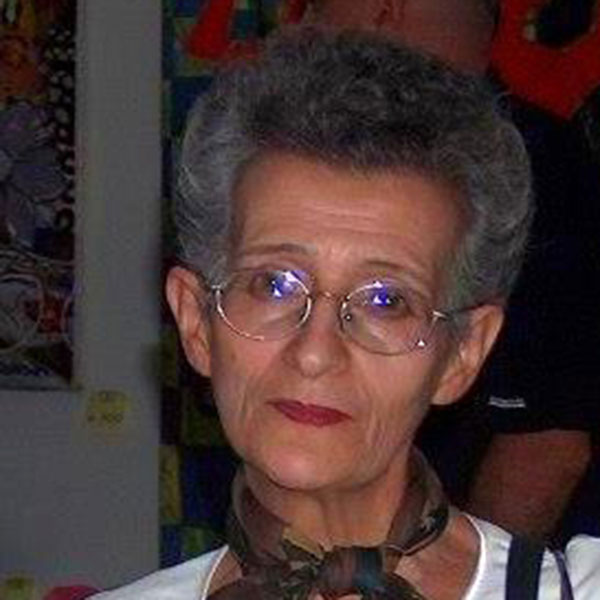
Marina Stepanyan
Art critic